Spring is not just the start of construction season. It is the window where commercial property teams still have control.
Freeze-thaw cycles, trapped moisture, snow load, and weeks of temperature swings can accelerate conditions that were already forming before winter began. By the time March and April arrive, cracks may be wider, mortar joints more open, facade materials looser, and moisture issues that stayed quiet in January are now visible.
The property teams that catch this early are the ones who get to plan repairs around budget, access, and occupancy. The ones who wait are the ones who end up reacting.
This is a practical inspection guide built specifically for commercial buildings — especially properties with masonry exteriors, aging facades, waterproofing vulnerabilities, or any signs of movement.
Why Michigan Winters Are Hard on Commercial Buildings
Exterior materials absorb moisture. Temperatures swing above and below freezing. Snow and ice sit on surfaces, melt, refreeze, and work their way into weak joints, cracks, and transitions.
That cycle hits the same problem areas over and over:
• Masonry walls with aging or deteriorating mortar
• Facades with existing cracks or compromised sealants
• Parapets and exposed elevations
• Window and door openings and their perimeter transitions
• Below-grade walls and waterproofing transitions
• Older commercial buildings with deferred maintenance
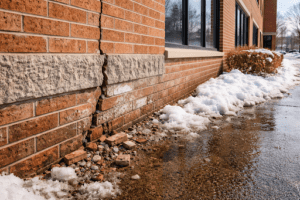
Winter rarely creates brand-new problems. It accelerates the ones already there. What looked manageable in October can look very different in March.
Start With Masonry and Exterior Wall Surfaces
Masonry and exposed wall surfaces are usually where winter damage shows up first and most clearly.
Cracked Brick, Block, Stone, or Concrete
Look for new cracks, widened cracks, or patterns that keep repeating in the same area. Stair-step cracks in masonry, vertical cracks near corners, and cracking around openings all deserve attention. The bigger concern is not any single crack — it is change and pattern. Expanding cracks, cracks accompanied by staining or displacement, or cracks that reopened after prior repairs, need to move beyond routine observation.
Spalling, Flaking, or Surface Material Loss
If brick faces are coming off, stone is deteriorating, or concrete surfaces are flaking and scaling, freeze-thaw cycles have pushed moisture damage further than it was before winter. Spalling is one of the clearest signs that exterior materials are actively breaking down — and one of the most common ways a manageable repair turns into a full restoration project when left alone.
Open Mortar Joints and Deteriorated Tuckpointing
Mortar joints often show winter damage before other wall components do. Missing mortar, eroded joints, and cracked pointing create direct paths for moisture to keep entering the wall system. For commercial properties, joint failure is rarely just a finish issue — it typically signals growing building envelope exposure that leads to continued masonry deterioration, water intrusion, and broader facade repairs.
Bulging, Bowing, or Displaced Wall Sections
Anything out of plane should be taken seriously and documented immediately. A wall that appears to lean, bulge, separate, or shift is not showing routine winter wear. That kind of movement can point to trapped moisture, corroded steel, support failure, or more advanced deterioration behind the visible surface.
Inspect the Facade for Visible Distress
Winter makes facade issues more obvious — especially on older commercial and institutional buildings.
Cracks Around Windows, Doors, and Transitions
Openings and material transitions are among the most common weak points on a commercial facade. Check around windows, doors, shelf angles, parapets, and any location where one exterior material meets another. These areas often reveal movement, failed joints, or moisture entry before the rest of the wall — and they are the spots most likely to continue worsening if not addressed early in the season.
Rust Stains and Signs of Failing Steel
Rust staining on a masonry facade is not cosmetic. It can indicate corrosion in lintels, shelf angles, or other embedded steel components. When steel corrodes, it expands — creating cracking, displacement, and pressure on surrounding masonry. If rust staining is visible, the underlying issue may already be more advanced than the surface suggests.
Loose Materials or Falling Debris
Walk entries, sidewalks, loading areas, and tenant-facing elevations with an eye for loose brick, stone, concrete fragments, or unstable facade sections. Once facade materials start coming loose, the issue shifts from maintenance planning to active risk management. That changes the urgency of the conversation — and your liability exposure.
Check Waterproofing and Building Envelope Conditions
Water Stains and Efflorescence
White mineral deposits, dark streaking, and recurring moisture marks mean water is moving through the wall. Surface cleaning improves appearance temporarily. It does not fix the moisture pathway. When staining reappears in the same area after winter, treat it as active exposure — not a residual cosmetic issue.
Failed Sealants and Vulnerable Joints
Sealants take significant abuse over a Michigan winter. Look for cracking, shrinkage, splitting, or separation at perimeter joints, penetrations, transitions, and control joints. Small sealant failures compound quickly when spring rain begins. These are easy to miss and expensive to ignore.
Leaks or Dampness Near Exterior Walls
If tenants or staff reported leaks, damp finishes, staining, or moisture near perimeter walls during or after winter, do not assume the roof is the only source. Masonry deterioration, failed joints, facade cracks, and waterproofing breakdown can all drive interior moisture. Post-winter inspection should connect interior symptoms to what is happening on the outside.
Look for Foundation or Structural Movement
New or Widening Crack Patterns
Cracks that widen over time, repeat across multiple connected areas, or show up with displacement may point to something larger than seasonal wear. A post-winter walkaround is not about diagnosing every crack — it is about identifying which conditions have moved out of the watch-and-monitor category.
Distress Concentrated Along One Elevation
When cracking, movement, or separation is concentrated on one side of the building, that pattern matters. It may point to settlement-related stress, support problems, or conditions affecting a specific wall assembly. Patterns tell a better story than isolated symptoms.
Door, Window, or Wall Alignment Issues
If exterior movement is beginning to affect openings, transitions, or visible alignment, that is a sign the issue may extend beyond surface repair. When multiple symptoms stack up in the same area, the building is communicating something that deserves a professional evaluation.
Do Not Overlook Parapets, Coping, and High-Exposure Areas
Some of the most vulnerable parts of a commercial building are also the least convenient to inspect. Parapets, coping stones, cornices, upper facade transitions, and exposed wall caps take heavy weather exposure year-round. After winter, check these areas for:
• Open joints and cracked coping
• Loose masonry or displaced sections
• Staining below the parapet line
• Signs of water entry at top-of-wall transitions
Conditions at the top of the wall drive moisture problems lower on the building. Do not leave these off the spring inspection list.
What to Document After Winter
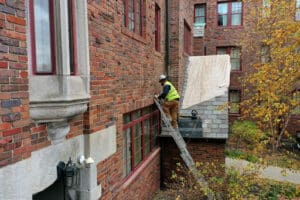
A useful post-winter inspection captures enough information to make the next conversation faster and more accurate. Document:
• Location by elevation — front, rear, north wall, parapet above loading dock. Specifics matter.
• Clear photos of each condition — wide shots for context, close-ups for detail.
• Whether the issue is isolated or repeating across multiple elevations.
• Interior symptoms tied to exterior wall areas — leaks, staining, tenant complaints.
• Whether the condition appears to be progressing since last year.
This documentation turns a general concern into a clear, actionable scope conversation with a contractor.
When a Post-Winter Issue Should Move to a Site Visit
Not every winter-related condition needs immediate repair. But some clearly warrant a closer look. A site visit makes sense when you are seeing:
• Cracked masonry with staining or leaks
• Widespread mortar joint failure
• Spalling materials across active elevations
• Rust staining with cracking or displacement
• Facade movement or loose materials
• Recurring moisture near exterior walls
• Multiple symptoms showing up in the same area
• Signs that masonry, waterproofing, and structural concerns may overlap
FAQ
What should property managers inspect on a commercial building after winter?
Start with the exterior envelope. Check masonry walls, mortar joints, facade surfaces, sealants, parapets, coping, and areas around windows and doors. Look for cracks, spalling, staining, rust, loose materials, and signs of leaks near exterior walls.
How does winter damage show up on commercial masonry buildings?
Most commonly as cracked brick, flaking surfaces, spalling, open mortar joints, staining, and moisture-related deterioration. Freeze-thaw cycles tend to worsen conditions that were already present before winter began.
Are cracks after winter always a foundation problem?
No. Some cracks are tied to surface deterioration, moisture exposure, or seasonal movement. But widening cracks, repeated crack patterns, displacement, or concentrated distress along one elevation may justify a broader evaluation.
Why do water stains and efflorescence matter after winter?
They indicate that moisture is moving through the wall assembly — pointing to failed joints, facade cracks, waterproofing issues, or other building envelope exposure that requires more than surface cleaning.
When should a property manager schedule a site visit after winter?
When damage is active, repeating, spreading, or connected to moisture, movement, or loose facade materials — especially when multiple symptoms show up in the same area.
Spring Is the Right Time to Act. Don’t Lose the Window.
The property teams with the most budget flexibility and scheduling control are the ones who assess conditions before spring rain compounds the damage — not after.
Brickworks Property Restoration works with commercial property owners, facility teams, and project stakeholders across Metro Detroit and Southeast Michigan to identify what winter exposed and define the right repair path. Whether the issue involves masonry restoration, facade repair, waterproofing, or a combination of work, an early site visit gives you clarity before the scope grows.
Submit a service request to schedule your post-winter commercial building assessment.